Does Turnitin Detect AI Humanizers? The Bypasser Update Explained
How Turnitin's AI bypasser detection works, what the report shows, and which kinds of humanized text it catches or misses after the October 2026 update.
For about two years, the standard advice for getting AI text past Turnitin was to run it through a humanizer. In August 2025 Turnitin answered that advice directly. Its AI writing report gained AI bypasser detection, a model trained specifically on the output of humanizer tools. On October 14, 2026, Turnitin shipped another accuracy update to its English model, right as midterm papers started landing in instructors' queues.
So the question students keep searching has a more complicated answer than it used to. Turnitin does detect some humanized text. This guide covers which humanized text gets flagged, how it shows up in the report, and where the model still struggles.
What Turnitin actually added
Turnitin announced the feature on August 27, 2025. Chief product officer Annie Chechitelli told Plagiarism Today that the company had "researched and identified the signals and patterns of leading humanizers" and trained its model on them, arguing that humanizers "leave a statistical trace that can be learned and detected."
According to Campus Technology's coverage, the capability launched for English only and sits inside the existing report, so instructors do not need a separate tool or integration. The University of Bristol's internal update told staff that no assignment settings needed to change and that reports generated before August 27, 2025 had to be resubmitted to pick up the new detection.
Turnitin's model documentation lists the release history since then: recall improvements in October 2025 and February 2026, and an English accuracy update on October 14, 2026. Updates are not retroactive. A paper scored in September keeps its September score unless it is resubmitted.
How bypassed text appears in the report
There is no new color or third percentage to look for. The AI writing report still has two categories:
AI-generated only. Text the classifier believes came from a large language model. Since the August 2025 update, this category also reports how much of that AI text appears to have been modified by a bypasser tool. Humanized passages are folded in here rather than treated as a separate verdict.
AI-generated text that was AI-paraphrased. Text that looks AI-written and then reworded by a paraphrasing tool or word spinner. Turnitin has detected this since December 2023 and broke it out as its own category in July 2024.
The display rules from earlier updates still apply. Submissions need at least 300 words of qualifying prose, and scores between 1% and 19% are shown only as an asterisk with no highlights, a rule Turnitin added to cut down on false positives. The practical result is that a lightly flagged paper often shows "*%" rather than a number.
The design choice matters. Before August 2025, a humanizer that pushed a paper below the AI threshold produced a clean-looking report. Now the same paper can land in the AI-generated category with a note that bypasser modification was detected, which is a different conversation for a student to walk into.
Why humanizers leave a trace
Most humanizer tools work by surface substitution. They swap words for synonyms, flip active and passive voice, insert filler phrases, and break or merge sentences. Those edits push down the signals older detectors relied on, but they create new regularities of their own.
Synonym swapping produces odd word choices that no fluent writer would pick in context ("utilize" becoming "employ" becoming "make use of" across a single paragraph). Restructuring tools tend to apply the same handful of transformations everywhere, so the text inherits a mechanical sameness at a different level. Some cheaper tools introduce deliberate typos or awkward grammar, which reads as noise to a person and as a pattern to a model that has seen thousands of examples from the same tool.
That is the logic behind Chechitelli's "statistical trace" claim. A classifier trained on output from specific humanizers learns their fingerprints the same way the original detector learned GPT-4's. The em-dash post covers the human-visible version of this: the tells that survive cosmetic edits are structural, and surface rewording leaves the structure intact.
What the update still misses
Turnitin's own framing points to the limits. The model was trained on leading humanizers, meaning the popular ones at training time. That leaves several gaps.
Newer or less common tools. A classifier tuned to known fingerprints lags behind tools that change their methods. Turnitin's recall updates in late 2025 and early 2026 suggest the company is retraining to keep up, which also implies it was missing things before each update.
Substantial human revision. When a writer restructures arguments, adds their own examples, and rewrites for voice, there is no tool fingerprint to find. The classifier scores the final prose, and heavily revised text looks like heavily revised text.
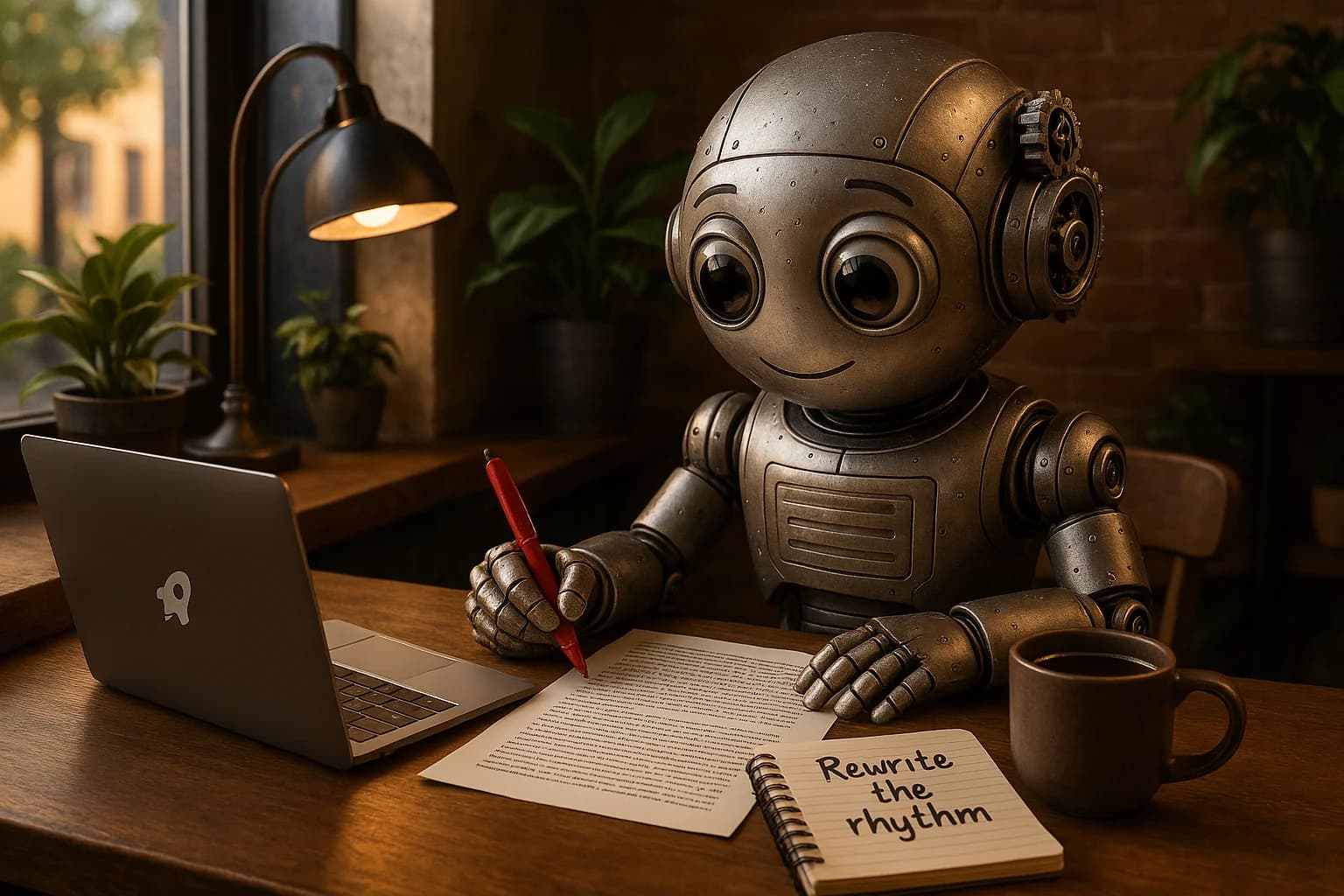
Rhythm-level rewriting. Detectors still lean on the statistical shape of writing: how predictable each word is and how much sentence length varies. Tools that rework cadence and vocabulary distribution, rather than swapping words one at a time, change the features the model measures instead of decorating them. The mechanics are covered in how Turnitin's AI detection works.
Short and non-English work. Bypasser detection launched for English only, and anything under 300 words is not scored reliably.
Independent testing is still thin. Jonathan Bailey at Plagiarism Today noted at launch that Turnitin's claims needed outside verification and that a low false-positive rate is still too high for AI detection to be used alone. Turnitin's own documentation repeats that point: the score should not be the sole basis for action against a student.
What this means if you use a humanizer
The update raises the cost of the cheapest approach: paste ChatGPT output into a free word spinner, paste the result into the assignment, submit. That workflow is what the bypasser model was trained on, and it is the most likely to be flagged in a resubmitted or newly submitted paper.
Approaches that hold up better share a common trait: they change the writing's statistical shape rather than its vocabulary. In practice that looks like:
Revise for structure, not synonyms. Reorder points, merge or split paragraphs, and add specifics only the writer would know. A detector has nothing to match against a sentence that came from your notes.
Vary sentence length on purpose. Mix short sentences with long ones. Uniform 18-to-24-word sentences are the strongest remaining tell after any tool pass.
Check before submitting. Run the final draft through the Duey AI Detector to see where a classifier lands and which passages it highlights. It does not replicate Turnitin's proprietary model, but it shows the perplexity and burstiness behavior that drives most detectors.
Use a humanizer that targets rhythm. The Duey Humanizer rewrites cadence and vocabulary distribution instead of swapping words, which is the distinction that matters against a bypasser classifier. Background on that approach is in how to humanize AI text. No humanizer, Duey's included, can promise a specific Turnitin score, and the right move is to read the output, edit it in your own voice, and recheck.
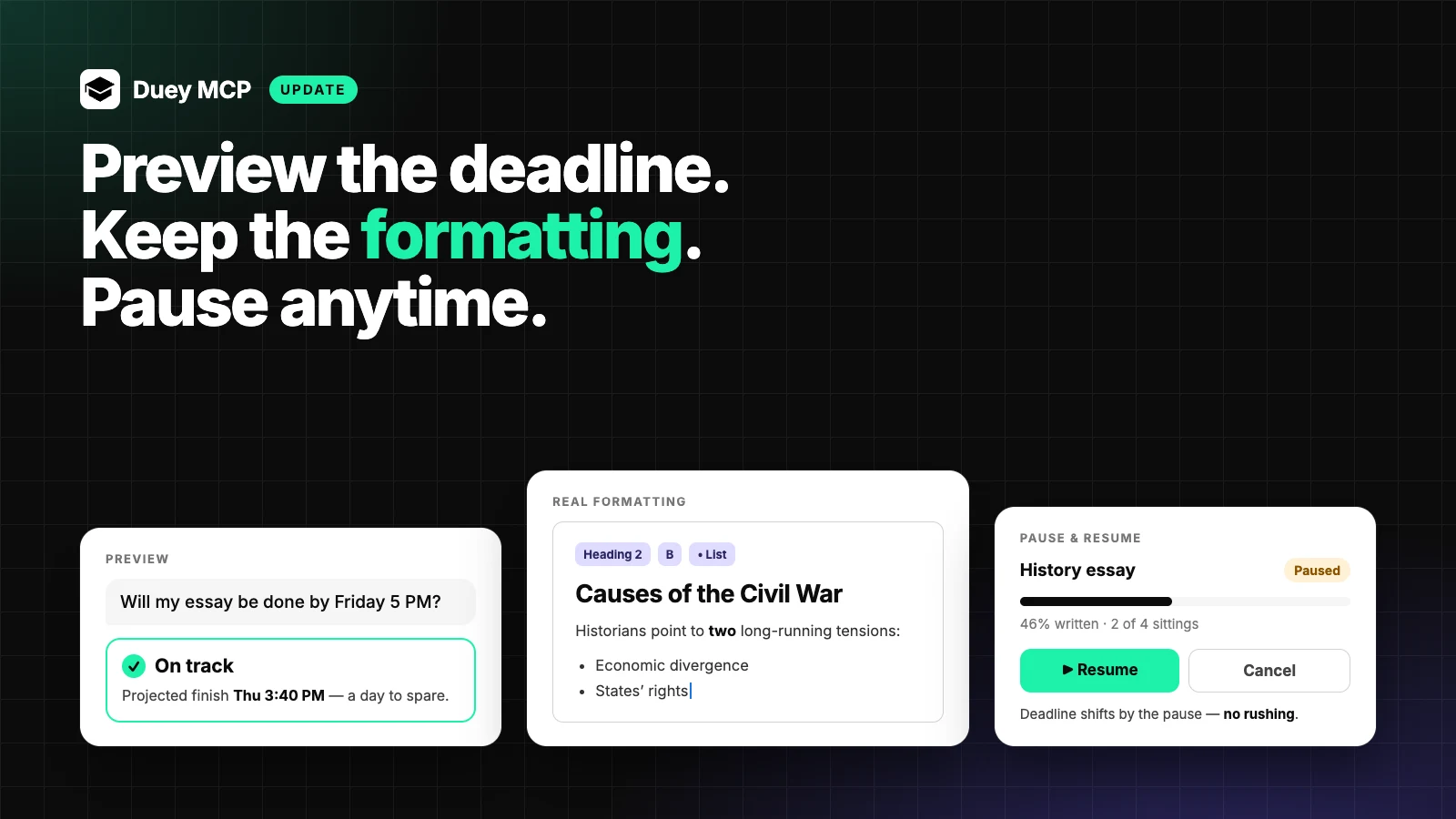
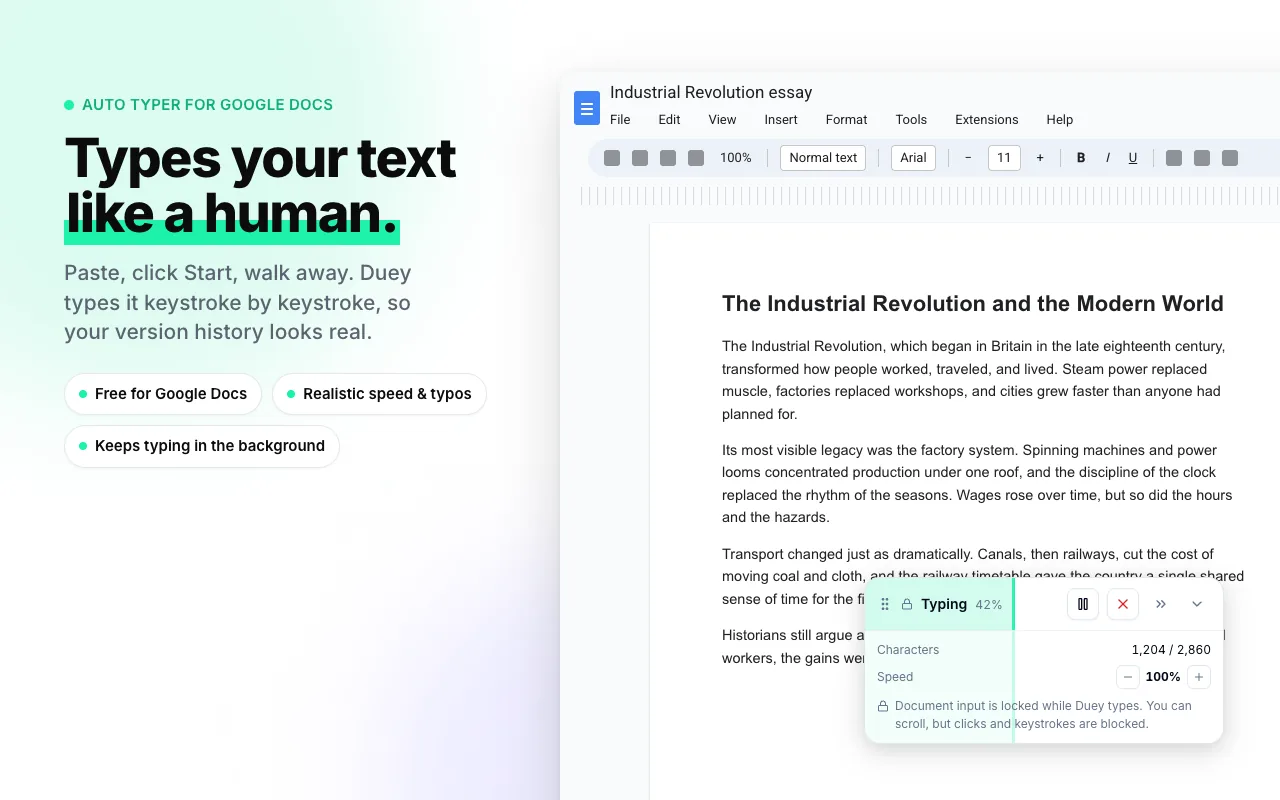
Process evidence is the other half. Many instructors now review Google Docs revision history alongside the AI report, and a document where a finished essay appears in one paste looks suspicious regardless of the score. The free Duey Auto Typer types text into Docs at a human pace instead of pasting it, and Duey Pro adds Auto Typer Pro, Sessions, the Humanizer and the AI Detector in one plan.
The short version
Turnitin can now flag text from popular humanizer tools, folds that finding into the existing "AI-generated" category, and keeps retraining (most recently on October 14, 2026). It is best at catching surface-level word spinning and weakest against substantial human revision and rewriting that changes rhythm. The score remains a probability limited to English for bypasser checks, and Turnitin says it should not be used on its own.
FAQ
Can Turnitin detect QuillBot?
QuillBot-style paraphrasing has been a Turnitin target since December 2023, and that text appears under the "AI-generated text that was AI-paraphrased" category. Detection depends on how much the original AI text was changed and whether a human revised it afterward.
Does Turnitin show a separate humanizer score?
No. Bypasser findings are reported within the "AI-generated only" category rather than as a third percentage. The report layout and highlighting did not change with the update.
Will an old paper be rescored with the new model?
Not automatically. Turnitin's updates are not retroactive, so a paper is only checked for bypasser modification if it is submitted or resubmitted after the update.
What does an asterisk instead of a percentage mean?
The AI score landed between 1% and 19%. Turnitin hides scores in that range and attributes no highlights to them, because low scores have the highest false-positive risk.
Can I check my paper against Turnitin before submitting?
Turnitin does not offer a public checker for students. Other detectors approximate the same signals, so running a draft through an AI detector gives a reasonable read on how it will look statistically.
Want to see what a detector sees before your instructor does? Run your draft through Duey's AI Detector, then use the Humanizer on any passages that come back flagged.